
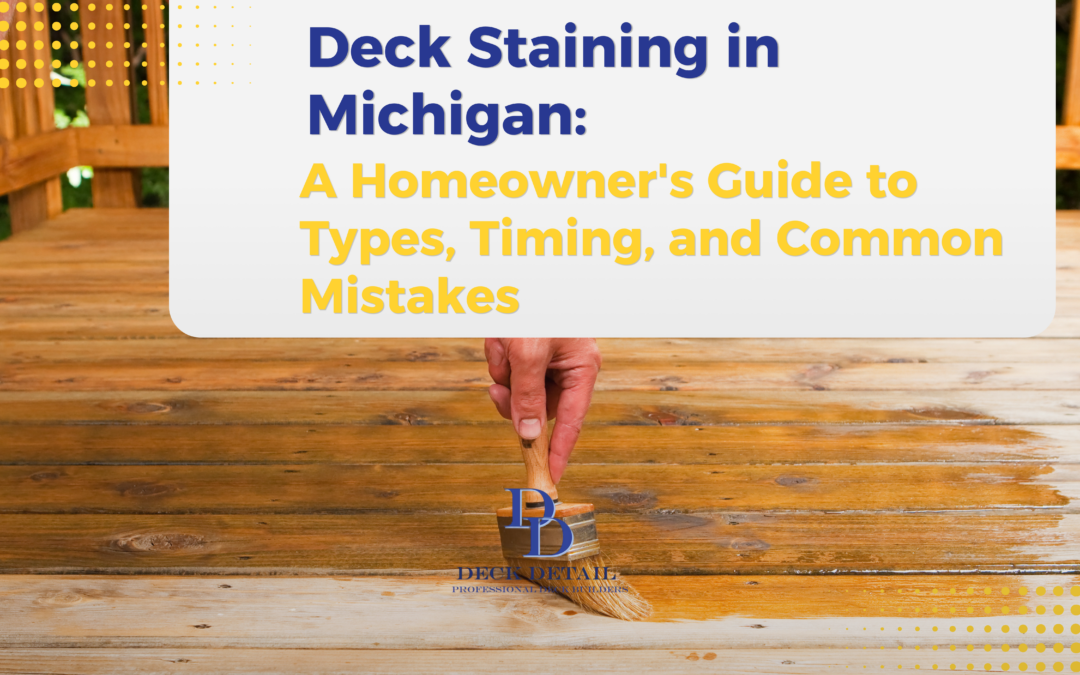
Your deck is an investment in your home’s look and durability. But Michigan weather, from sun and rain to snow and freeze-thaw cycles, beats it down year after year. Deck staining protects the wood and refreshes the color, but only if you pick the right stain type, prep well, and time it right. This guide walks you through the key decisions so you can confidently stain your own deck or know what to expect from a pro.
Why Deck Staining in Michigan Requires Special Care
Michigan weather is hard on outdoor wood. Sun, rain, humidity, snow, and freeze-thaw cycles all take a toll year after year. That is why staining is not just about how your deck looks. It is also about protection. A quality stain will protect the wood from environmental damage and improve its appearance at the same time. When applied well, it can extend the life of your deck for years.
Deck Staining vs. Sealing: Understanding the Difference
Sealing and staining are often lumped together, but they are not the same thing. A sealer forms a clear or lightly tinted layer that keeps water and UV rays out of the wood. A stain adds color while also offering protection. Many products, like the TWP sealer we typically use can do both. If you prefer the natural look of your wood, a clear or light sealer may be enough. A stain is usually best if you want to refresh the color or hide age.
The Main Types of Deck Stain
Stains come in a few styles, each with a different look and level of coverage. Here are a few common types:
- Clear or transparent sealers that offer light protection with almost no color change
- Semi-transparent stains, which add a bit of color while still showing the wood grain
- Semi-solid stains that give more color coverage while hinting at the grain
- Solid stains, which are opaque and hide most wood details
The right choice for you depends on the age of your deck, the wood species, and how much of the grain you want to see.
Common Mistakes with Deck Staining in Michigan
A lot goes into a stain job done well. Here are a few common mistakes to watch for:
- Skipping the cleaning and prep step
- Applying stain when the wood is too wet
- Staining in direct sun or right before rain
- Using too much stain (this can lead to peeling)
- Choosing the wrong stain type for the wood
Prep is often the biggest factor. If the surface is not clean and dry, even the best stain will not perform the way it should.
When to Schedule Your Deck Staining
Timing is so important with deck staining. It typically works best when the weather is mild, the wood is dry, and no rain is in the forecast for the next day or two. Late spring through early fall is typically the recommended time. New wood decks often need to weather for a few weeks or months before they are ready for stain, which is another reason to plan ahead.
How Staining Fits Into Your Maintenance Plan
Staining is not a one-time project. Most decks need a fresh coat every two to five years, depending on the stain type and how much sun and water the deck sees. A few signs that it’s time to restain your deck include faded color, water no longer beading up on the wood, and a dry, tired look on the surface. Regular cleaning and inspections are key to helping you catch these signs before the wood starts to suffer.
DIY vs. Hiring a Pro
Some homeowners attempt to tackle this project on their own, but the results can vary a lot depending on prep and technique. If you go with a professional job, you’ll usually get better prep, more even coverage, and a finish that holds up longer.
At Deck Detail, we use custom low-pressure power washers built specifically for decks. We rely on our deck cleaners and the flushing power of the water rather than high pressure, which protects the wood. We also use environmentally friendly cleaning chemicals that will not harm your plants, children, or pets.
What to Look for in a Professional
If you hire a pro, expect them to:
- Inspect the deck and recommend repairs before staining
- Use low-pressure power washing to protect the wood rather than high-pressure rigs that damage it
- Apply eco-friendly cleaners and stains that will not harm kids or pets
- Offer a warranty on labor and materials
A solid pro will also often give you a free estimate and walk you through their process.
Your Staining Plan
Whether you handle it yourself or bring in a pro, three steps make all the difference:
- Know what you want. Pick a stain type (clear, semi-transparent, semi-solid, or solid) that matches your deck’s condition and your style.
- Get the timing right. Stain in mild weather (late spring through early fall) when the wood is dry and no rain is in the forecast.
- Prep like a pro. Clean and dry the surface thoroughly. It is the number one factor in how long your stain lasts.
Ready to Stain Your Deck?
If you’re ready to protect your deck, Schedule your free estimate today. Our team will inspect your deck, walk you through your stain options, and handle the prep and application so you get the highest quality finish. With 32 years serving Plymouth, Northville, and Ann Arbor, we know what Michigan decks need. Have questions? Contact us anytime.